
Who Is Kai?
Kai Chisaki is a character I didn’t come to gently.
What began as curiosity hardened into fixation, fascination and something quieter but more enduring. This isn’t neutral admiration. It’s an attachment shaped by control, silence, collapse and the way he holds himself apart from the world. This shrine exists because those things stayed with me.
In My Hero Academia, Kai Chisaki known by his villain name, Overhaul is the leader of the Shie Hassaikai, a yakuza organization seeking to reclaim its former power in a world dominated by Quirks. He is intelligent, methodical, and ruthless, driven by a belief that Quirks are a sickness that must be eradicated. His actions ultimately lead to his downfall and imprisonment.
What defines Kai more than his role is the way he relates to others: through distance, utility, and control. He fears contamination, despises unpredictability, and values loyalty in ways that are rigid and often destructive. He is capable of care, but it is narrow, conditional, and shaped by obsession rather than empathy. When his systems fail, he doesn’t adapt — he fractures.
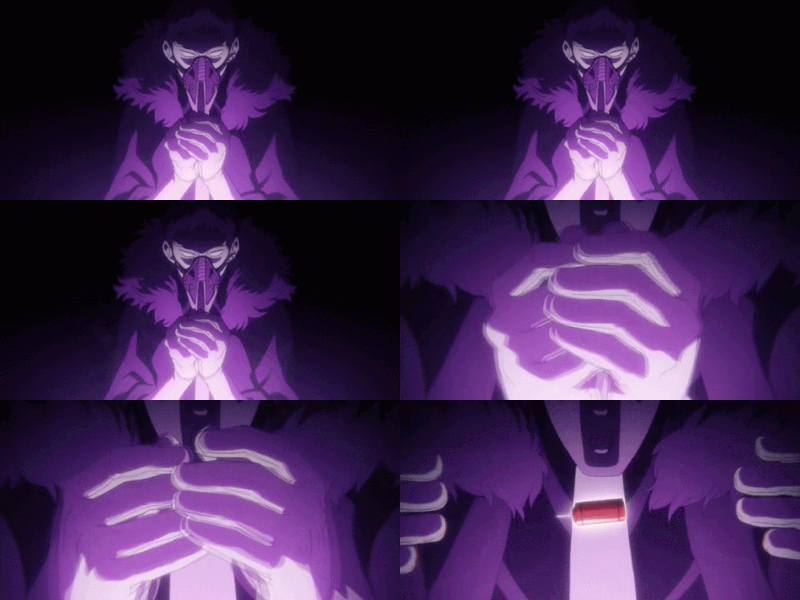
How He Moves Through the World
Kai is controlled to the point of rigidity. He speaks politely, keeps emotional distance, and maintains strict hierarchies around him. This composure is not calm — it’s containment.
He fears contamination in both literal and symbolic ways. Dirt, blood, unpredictability, and emotional closeness all register as threats. His mask, gloves, and compulsive cleaning aren’t just habits; they’re barriers. People who cross those boundaries are treated as problems to be removed rather than individuals to be understood.
Loyalty is the one place where this breaks. Kai’s devotion to his boss is absolute and personal in a way nothing else is. It overrides his logic, his ethics, and eventually his control. When that structure collapses, so does he. He doesn’t recalibrate — he spirals.
The Break
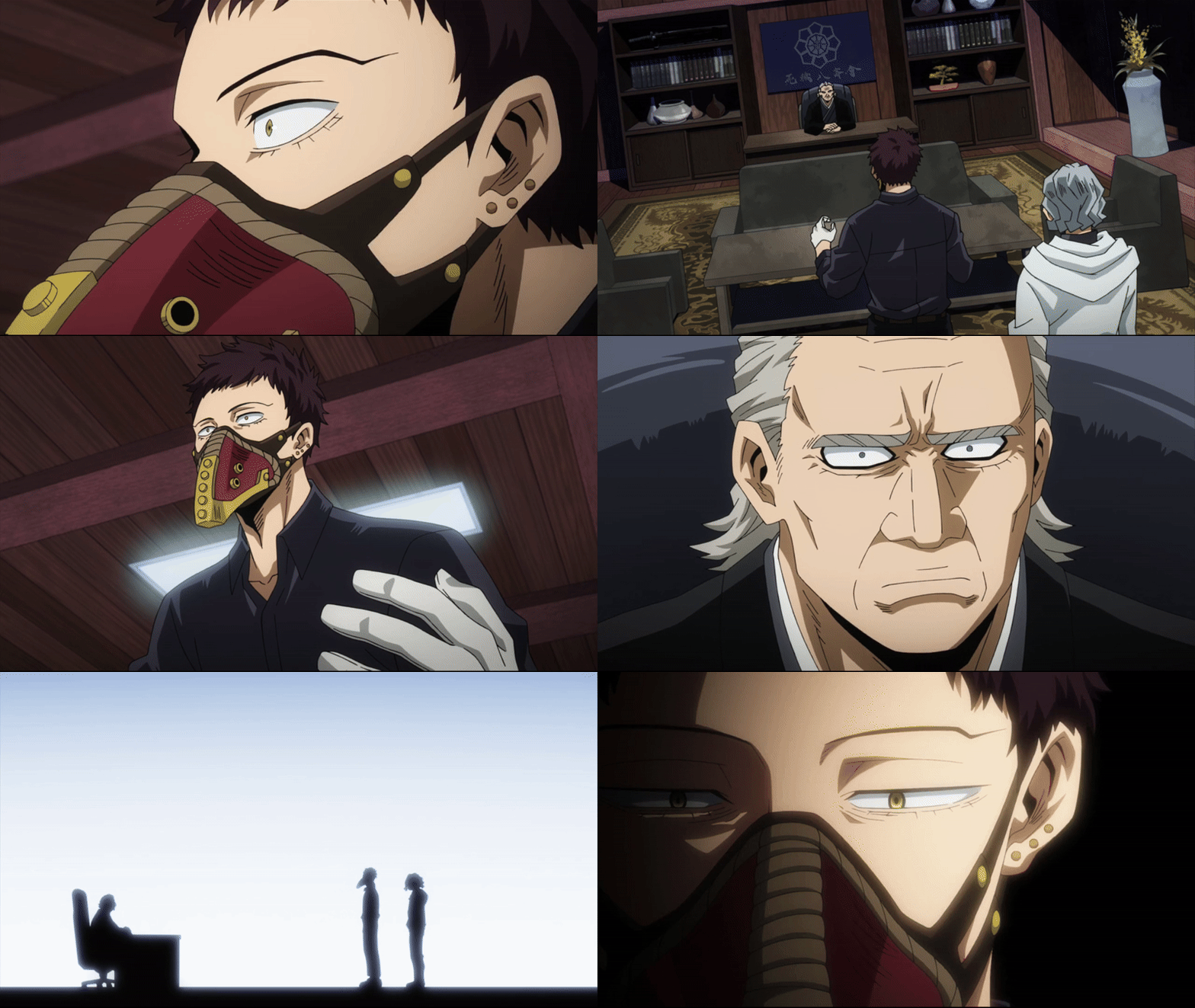
When Kai’s boss rejects the idea of the Quirk-erasing bullets, something in Kai fails to hold.
The refusal isn’t just professional, it's personal. The one person whose approval mattered denies him, and Kai cannot accept a future where his vision is dismissed. In that moment, loyalty curdles into violence. He attacks his boss and leaves him in a coma, believing however, in a twisted way, that he is acting for the sake of the man and the organization he devoted his life to.
This act doesn’t free Kai. It traps him. Everything that follows is shaped by this decision: the need to justify it, to finish what he started, and to restore meaning to a betrayal he can’t undo.
Eri
This section references child abuse and exploitation.After the break, Eri becomes the center of Kai’s plans.
He views her not as a child, but as a resource — a means to complete what his boss refused. His treatment of her is cruel, calculated, and justified entirely through control. Any care he shows is conditional, bound to her usefulness, and enforced through fear and isolation.
Publicly, Kai presents himself as her guardian. Privately, he subjects her to repeated harm in pursuit of his goal. He does not see this as abuse; he sees it as necessity. When Eri is taken from him, his composure finally collapses. What follows is not remorse, but panic — the loss of both his plan and the structure holding him together.
This is where Kai stops being someone who can claim devotion as motivation, and becomes someone defined by what he is willing to sacrifice to avoid being wrong.
Collapse
Once Eri is taken and his plans unravel, Kai loses the structures that kept him functional.
His control fractures publicly and irreversibly. The composure, hierarchy, and certainty that once defined him fall apart under pressure. He reacts with desperation rather than strategy, obsession rather than calculation. What follows isn’t adaptation but erosion.
By the time he is captured, there is very little left to contain. Imprisonment does not reform him or offer resolution. It simply halts him. His world narrows to routines, restraints, and silence — a space where control exists only because nothing else does.
This is not a moment of reckoning. It is an ending defined by absence: of power, of purpose, of the future he believed he was building.
After
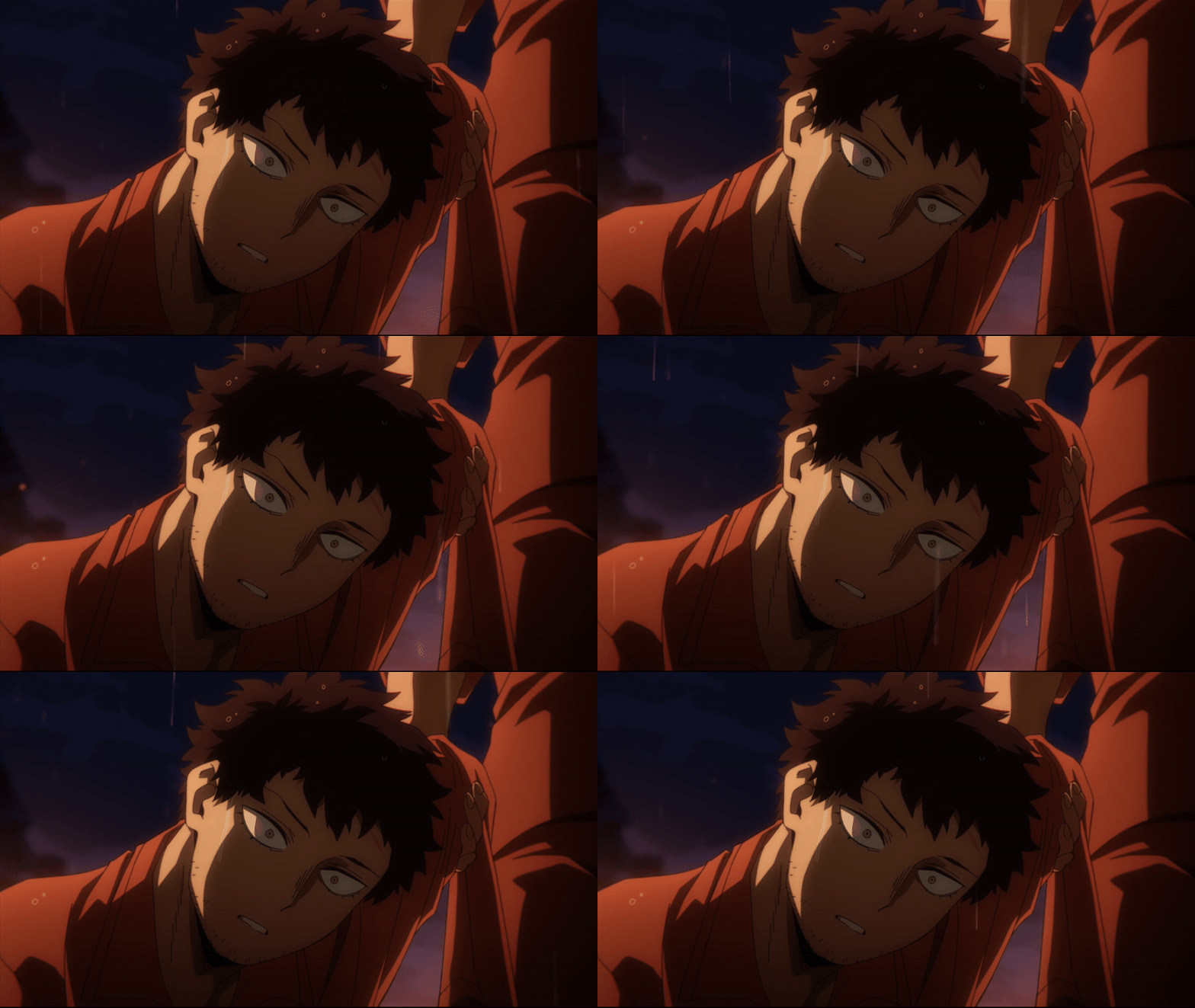
Kai is sentenced to life in prison.
What remains of him is contained, not healed. His days are reduced to routine and restriction — a controlled environment stripped of purpose. There is no plan left to pursue, no structure to rebuild. Only time.
At one point, his former boss visits him. The encounter offers no closure. Instead, it serves as a final act of dominance: a reminder of Eri, wielded deliberately, with the promise that Kai will never be allowed to forget what he did. Not as justice, but as punishment meant to endure.
Kai does not argue. There is nothing left to defend.
Closing Paragraph
This is where his story ends for me. Not with redemption or understanding, but with stillness. What remains is not the person he was, but the trace he left behind — and the choice to acknowledge it without turning away.